

- alarshadchoudhury
- February 10, 2025
- Uncategorized
How to Start a Career in Health and Social Care in the UK With No Experience
Are you interested in working in health and social care but worried because you have no previous experience?
You are not alone.
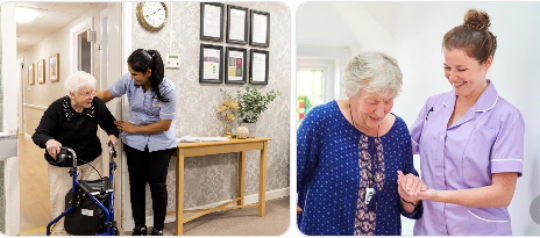
Many people who want to enter the care sector ask the same questions:
Can I really get a care job without experience? What training do I need? Do I need a university degree? Where should I start?
The good news is that there are entry-level routes into adult social care for people who are new to the sector. The UK government’s current Care Workforce Pathway even has a specific “new to care” role category designed for people starting their careers in adult social care.
That does not mean every care employer will hire without experience or that completing a course automatically guarantees employment. Employers have their own requirements.
However, you can take practical steps to make yourself better prepared and demonstrate that you understand what working in care involves.
What does working in health and social care involve?
Health and social care is a broad field.
Depending on your role, you could support people in:
– Residential care homes
– Nursing homes
– People’s own homes
– Supported living services
– Day services
– Community settings
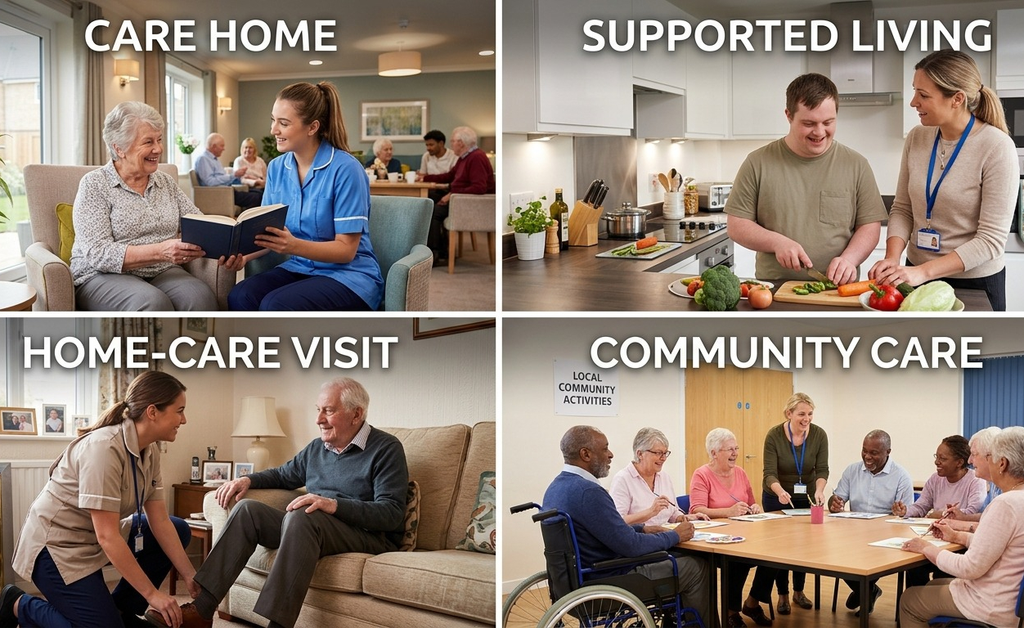
A care or support worker may help people with aspects of personal care, everyday activities and independent living.
The work is not simply about helping someone with physical tasks.
Good care involves communication, dignity, patience, safeguarding, empathy, confidentiality, teamwork and understanding the individual needs of the person receiving support.
That is why training matters.
Can you become a care worker with no experience?
Yes, it is possible to enter adult social care without previous sector experience.
The UK government’s “new to care” category is specifically described as a starting point for people with no experience in the sector. It focuses on developing foundational competence for safe practice and creating opportunities for further development.
But there is an important distinction:
No experience does not mean no preparation.
If you are new to care, you should use the opportunity to learn about the responsibilities involved before stepping into the workplace.
Relevant training can help you understand the principles behind good care and give you a stronger foundation for your first role.
What should you learn before applying for care jobs?

1. Person-centred care People receiving care are individuals, not tasks on a checklist. Person-centred care means understanding and respecting a person’s preferences, choices, needs, dignity and independence.
2. Safeguarding Care workers have an important responsibility to recognise and respond appropriately to concerns about abuse, neglect and harm.
3. Communication Care workers communicate with service users, families, colleagues and other professionals. Good communication can help prevent misunderstandings and support better care.
4. Health and safety Care environments have risks that workers need to understand. Training can introduce you to safe working practices and the importance of following workplace procedures.
5. Equality, diversity and inclusion Every person deserves to be treated with dignity and respect. Care workers need to understand how individual differences, beliefs, preferences and circumstances can affect the way support should be provided.
6. Mental health and wellbeing People receiving care may experience loneliness, anxiety, depression, dementia or other challenges. Understanding basic principles of emotional wellbeing can help you become a more compassionate and informed care worker.
7. Infection prevention and control Care workers need to understand how infections can spread and why good hygiene and infection-control practices matter.
What is the Care Certificate?
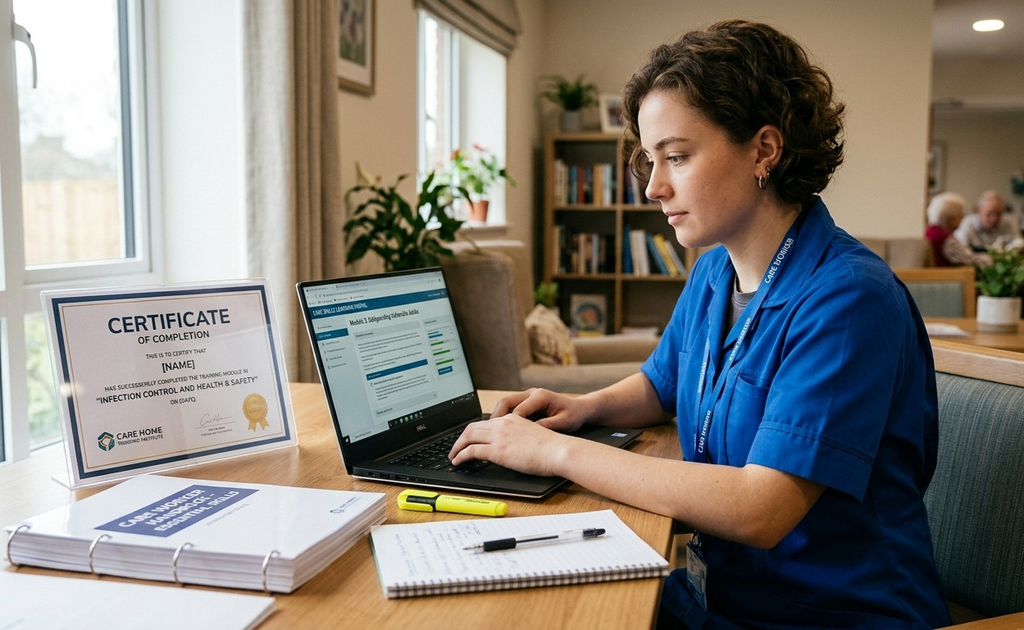
The Care Certificate is a set of standards designed to provide introductory knowledge, skills and behaviours for people working in health and adult social care.
The standards were updated in 2025 and now contain 16 standards, including a new standard covering awareness of learning disability and autism.
They cover areas such as:
– Understanding your role
– Personal development
– Duty of care
– Equality and diversity
– Person-centred working
– Communication
– Privacy and dignity
– Fluids and nutrition
– Mental health and wellbeing
– Dementia awareness
– Safeguarding
– Infection prevention and control
– Health and safety
– Basic life support
– Handling information
– Learning disability and autism awarenessOne important point: the Care Certificate standards themselves are not an accredited qualification. They are standards that can support induction and demonstrate the knowledge, skills and behaviours expected of workers. The separate Level 2 Adult Social Care Certificate is an Ofqual-regulated qualification.
Do you need a university degree to work in adult social care?
Not necessarily.
Many adult social care roles do not require a university degree.
Instead, employers may look at a combination of relevant training, practical skills, attitude, communication ability, experience and suitability for the role.
The important thing is to check the requirements of the specific job you want.
If you are starting from zero, online training can be a convenient way to build your knowledge while you prepare for your next career step.
A simple pathway for someone starting from zero
Step 1: Research the different care roles available.
Step 2: Decide which type of care interests you most.
Step 3: Learn the basic principles of health and social care.
Step 4: Consider relevant introductory training.
Step 5: Build your CV around your transferable skills.
Step 6: Look for volunteering, work experience or entry-level opportunities where appropriate.
Step 7: Apply for suitable roles.
Step 8: Continue developing your knowledge after getting into the sector.
Career development doesn’t stop when you get your first job. The current Care Workforce Pathway provides progression routes beyond the “new to care” stage, including care or support worker, enhanced care worker, supervisor and leadership roles.
What if you have experience from another industry?
Don’t assume that your previous career is irrelevant.
Skills from other jobs can be useful in care.
Customer service → communication and dealing with people.Teaching → patience, communication and supporting individual needs.

Hospitality → teamwork, hygiene and working under pressure.
Administration → organisation, record keeping and attention to detail.
Parenting or family caregiving → patience, empathy and practical support.
Your previous experience may not replace care-specific training, but it can give you transferable skills to build on.
How can online learning help?
If you work full-time, have family responsibilities or simply prefer learning independently, online study can make training more accessible.
A self-paced course can allow you to study around your existing commitments rather than having to attend a traditional classroom at a fixed time.
However, don’t choose a course simply because it is online.
Before enrolling, check:
– What exactly does the course cover?
– What certificate will you receive?
– Is the course relevant to your career goal?
– Is the provider transparent about accreditation?
– How is learning assessed?
– Can you study at your own pace?
– Is learner support available?
Ready to take your next big step?
If you’re exploring a career in health and social care, Deep Academy provides online learning options designed to help learners develop knowledge and career-focused skills.

Its health and social care learning options can be useful for people who want to build foundational knowledge, strengthen their CV or continue developing professionally.
The important thing is to choose training based on your actual career goal rather than simply collecting certificates.
Check here www.deepacademy.co.uk to see the courses that match your career goals.
Final thoughts
Starting a career in care without previous experience can feel intimidating.
But you don’t have to know everything on day one.
Start by understanding the sector. Learn the fundamentals. Build relevant skills. Research the roles available and continue developing as you gain experience.
The goal isn’t simply to collect a certificate.
The goal is to become better prepared for the work you want to do.
If health and social care interests you, explore relevant courses at Deep Academy and choose training that matches the direction you want your career to take.
Frequently Asked Questions
Can I become a care worker without experience?
Yes. Adult social care has an entry point specifically designed for people who are new to the sector. However, individual employers determine their own recruitment requirements.
Do I need a degree to work in adult social care?
Many entry-level adult social care roles do not require a university degree. Always check the requirements of the specific position.
Is the Care Certificate a qualification?
The Care Certificate standards are not themselves an accredited qualification. They are standards used to support introductory training and induction. The Level 2 Adult Social Care Certificate is a separate Ofqual-regulated qualification.
How many Care Certificate standards are there now?
There are currently 16 Care Certificate standards following the 2025 update.
Can I study health and social care online?
Yes. Online courses can be a flexible way to develop knowledge, but you should choose a course based on its content, suitability and the requirements of your intended career.
A WordPress Commenter
Hi, you can drop your thoughts and questions.